
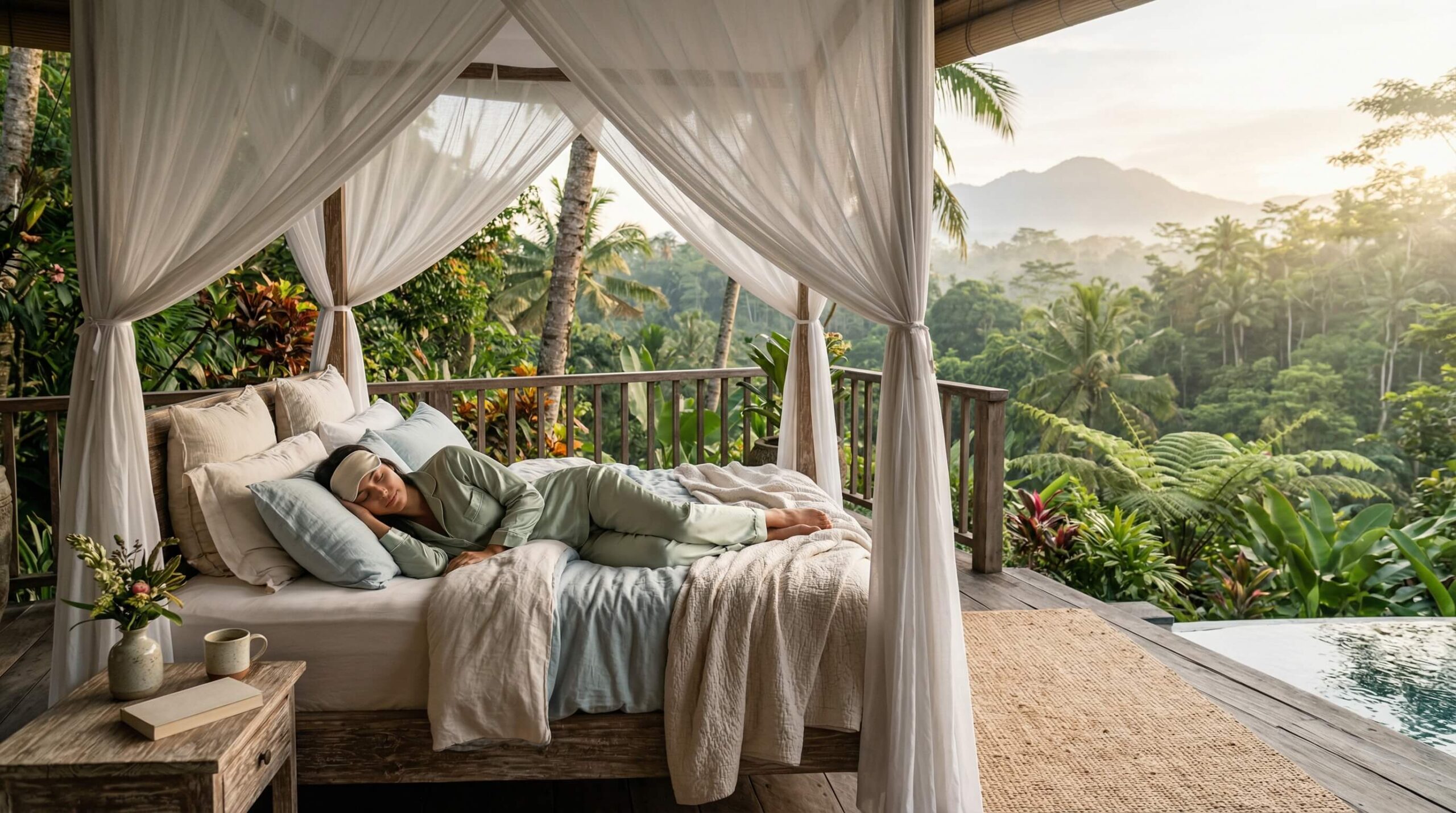
If you’ve spent your nights tossing and turning, you aren’t alone. In the UK, 74% of adults report poor sleep quality. This global fatigue has birthed a massive industry: sleep tourism. No longer a niche luxury, sleep-focused travel is forecast to grow by over $400bn by 2028. This trend treats rest not as a byproduct of a holiday, but as the main event.
What Exactly Is Sleep Tourism?
Sleep tourism goes far beyond basic hotel pillow menus. It focuses on fixing sleep quality through dedicated environments and professional intervention.
- Environmental Optimization: Rooms featuring soundproofing, blackout curtains, and medical-grade air filtration.
- Professional Guidance: Access to sleep coaches, guided meditations, and breathing workshops.
- Clinical Diagnostics: High-tech tracking and medical consultations to identify underlying issues like insomnia or sleep apnoea.
The Science Behind the Craze
We are currently in the midst of a global sleep crisis. One-third of adults worldwide struggle with insomnia, and in the U.S. alone, sleep deprivation costs the economy roughly £326bn annually due to reduced productivity and health issues.
The health stakes are high. Research links poor sleep to 7 of the 15 leading causes of death, including stroke, cancer, and heart disease. Furthermore, our modern reliance on smartphones has disrupted our natural circadian rhythms; the blue light from screens suppresses melatonin, making restorative rest nearly impossible for many.
Sleep: The New Status Symbol
In 2026, sleep is the ultimate luxury. As sleep expert Charlie Morley notes, “The next chapter [of health] is sleep.” This shift was accelerated by the COVID-19 pandemic, which saw a 58% spike in insomnia-related searches. Today, travellers are prioritizing “precision rest”—regulating light, temperature, and meal timing to maximize cellular recovery.
What to Expect from Sleep Tourism Packages
Packages vary from high-tech medical stays to ancient holistic retreats.
1. Medical-Led Diagnostics
For those with chronic issues, resorts like Grand Resort Bad Ragaz or SHA Wellness Clinic offer polysomnography. This involves overnight monitoring of brain activity, oxygen levels, and heart rhythms to provide a concrete medical roadmap for treatment.
Image credit: luxewellnessclub.com
2. Holistic and Ancient Therapies
Many retreats look to the past to solve modern problems.
- Ayurveda: Techniques like Shirodhara (pouring warm oil on the forehead) help calm the nervous system.
- Integrated Wellness: Destinations like Kamalaya in Thailand combine Traditional Chinese Medicine with naturopathy to treat the root causes of stress.
3. High-Tech Sleep Innovations
The “Sleep Tech” market is booming, with 64% of consumers now using wearables. Hotels are following suit:
- The Bryte Bed: Uses AI-enhanced coils to adjust pressure and temperature dynamically throughout the night.
- Equinox Sleep Chambers: Feature a “Dark. Quiet. Cool.” button that optimizes the entire room environment instantly.
4. Off-Grid Digital Detox
Nature is a powerful sedative. Research shows that spending just 20 minutes in nature lowers cortisol. Locations like Mountain Trek enforce device-free policies to help guests disconnect from “doomscrolling” and reconnect with their natural rhythms.
Top Global Sleep Destinations
| Region | Key Highlights | Notable Locations |
|---|---|---|
| Europe | The market leader with 235 locations. Focuses on luxury and clinical precision. | Vilnius, Lithuania (Top-rated for air quality); Spain (Most sleep-specific retreats). |
| Asia | Specializes in integrative wellness and traditional medicine. | Bali, Indonesia (Stress relief); Singapore (High-tech sleep apps). |
| North America | Centres on luxury tech and medical backing. | New York & California (Smart mattresses and soundproof “chambers”). |
Long-Term Benefits: Beyond the Checkout
The true value of sleep tourism lies in the “take-home” effect. These retreats provide guests with the tools to maintain rest long-term:
- CBT-I Techniques: Learning Cognitive Behavioural Therapy for Insomnia, the gold standard for sleep medicine.
- Consistent Hygiene: Establishing routines regarding caffeine, light exposure, and consistent wake times.
- Immune Support: Strengthening the body’s ability to release infection-fighting cytokines.
Your Path to Rest
The growth of this industry proves that quality sleep is no longer optional—it is a biological necessity. Whether through a high-tech “sleep chamber” in New York or a silent retreat in the mountains of Spain, sleep tourism offers a way to break the stress-sleep cycle.
As you look toward your next getaway, consider trading a packed itinerary for a restorative reset. Sweet dreams await.